Microplastics Don't Travel Alone: How Tiny Plastics Carry Toxic Chemicals
Author: Rachel Date Posted:1 September 2026

It’s the little things…
And when I say little, I mean microscopic. Nanoscopic!
As if we needed one more reason to avoid unnecessary plastic… Here’s another...
Sorption - a physical and chemical process where one substance becomes attached to another.
As we’ve already discussed many times in this blog, microplastics contaminate the globe.
From pristine rivers, to clouds to food, they accumulate in the environment, in plants and animals, and in us as well.
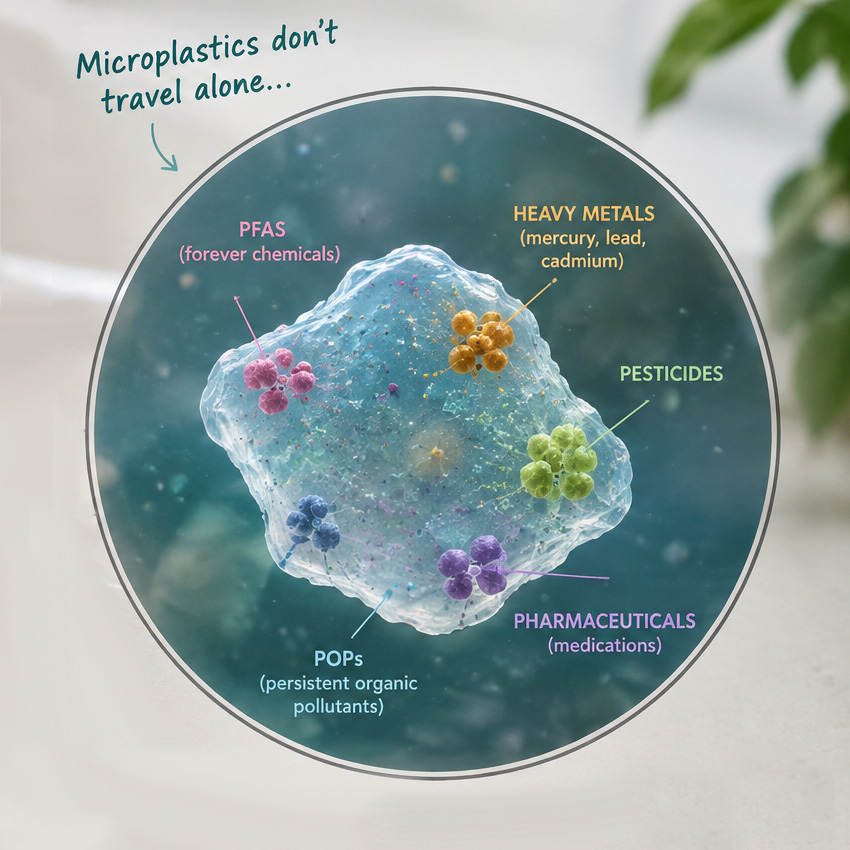
But what you may not know is that microplastics don't just exist in the environment - they also act like tiny hitchhikers for other pollution.
Toxic chemicals stick to their surfaces, allowing them to transport heavy metals, pesticides, pharmaceuticals, industrial contaminants and persistent organic pollutants (POPs) through rivers, oceans and our food chains.
An EPA NSW study showed the chemicals stick together even when exposed to seawater, creating further risk of harm to our marine friends and environment.
Unfortunately, many microplastic particles are too small (nanoscopic) to be completely removed during wastewater treatment, so they either pass through into waterways, carrying the hitchhiking contaminants with them, or become trapped in sewage sludge, which is usually reused as agricultural fertiliser - where they enter the food chain, or buried in a landfill - where they can escape as toxic leachate.
Neither of which is ideal...
In recognising how we contribute to these contaminants, the NSW EPA is looking at how we can stop them at the source by minimising microplastics entering wastewater treatment plants in the first place, and ways to stop them leaving when they arrive.
We can all help with the first part!
Here’s some simple every day swaps you can make to reduce the amount of microplastics and synthetic chemicals we send down the drain.
In the kitchen:
Items like dish scrubbers, sponges and other kitchen cleaning cloths are most often made with synthetic materials. They sit in hot water, create friction when used, then shed microplastics.
Swap these products out for natural material like coconut, sisal, loofah, cotton and other natural and compostable material.
Don't be fooled by mountains of foam. Extra bubbles don't necessarily mean better cleaning and are often created using synthetic foaming agents. Look for natural dish soaps or solid bars.
In the laundry:
Many of us don’t think much about the ingredients of our washing powder and fabric softener, unaware most contain synthetic chemicals.
- Look for grey water friendly options
- Skip the softener altogether. You don’t need it anyway, and most clothing tags recommend not to use it (this deserves its own blog).
Then there’s our clothes. Polyester, a cheap-to-produce, highly polluting synthetic fabric, makes up over 50% of all clothing produced globally, with around two-thirds containing some type of synthetic fibres.
When we wash these clothes, they shed millions of microfibres, estimated to contribute around 9% of microplastic entering our oceans.
- Look for natural fabrics.
- Lower washing temp to reduce fibre breakage.
- Use a filter or washing bag.
- Skip the dryer to avoid airborne microfibres.
- Wash less often and use full, less frequent loads.
In the bathroom:
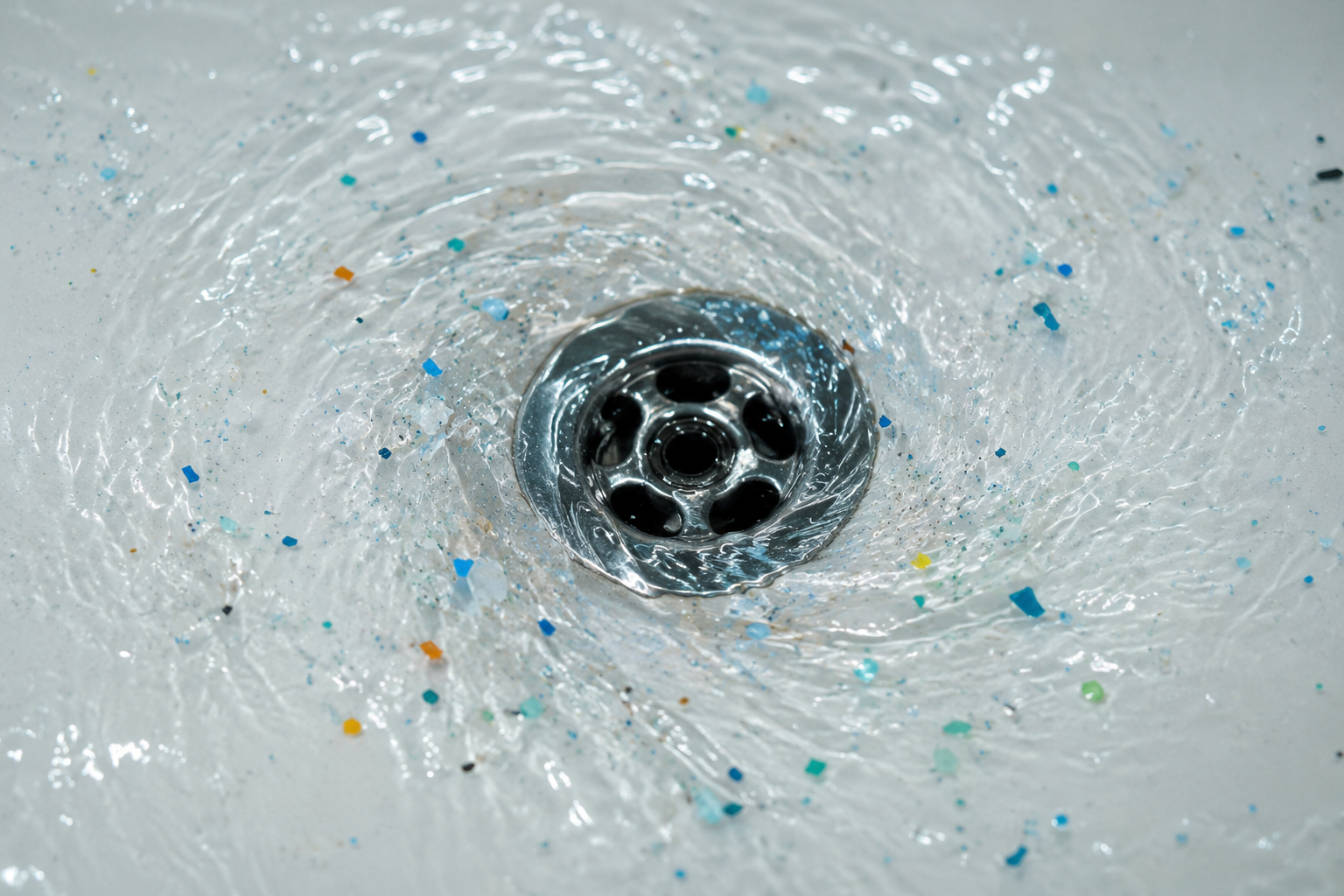
Every day, most of us rinse shampoos, conditioners, body wash, makeup and skincare straight down the drain without thinking twice.
But many conventional products contain synthetic ingredients that don't simply disappear once we pull out the plug or rinse off. Instead, we're sending them down the drain.
Some synthetic chemicals used in beauty products, including certain PFAS, parabens and phthalates, are small enough to penetrate the skin and enter the body and blood stream, accumulating in our bodies with repeated exposure.
Looking for hair and body care with natural ingredients isn’t just better for the environment, it’s a better personal choice, as well.
FINAL WORD
I used to assume that if a product was on the store shelf, someone had already made sure it was safe for people and the environment and would prevent the types of contamination I talk about here. You might feel the same way.
But don’t get disheartened - or throw everything out and start again. Just swap one thing at a time - research one product at a time. Just being aware helps you make different choices.
Progress – not perfection.
This is just a small snippet of a much bigger story, so explore some of the linked resources throughout this article if you want to learn more.
Explore further articles in this Blog.
Author: Rachel | Less waste Advocate
First published 1 September, 2026
Updated:
- - - - - - - - - - - - - - - - - - - - - - - - - - - -
All our blog articles written by Rachel or our Guest Bloggers are well researched and 100% written by a real human person. We hope you have been informed, educated or entertained.
To read more eco living articles, head over to our main blog page.
If there is something you would like to see us write about, we’d love to hear from you! Send us an email or find us on our socials! We love spreading the message of reducing waste and the overuse of unnecessary plastic, so follow along and come be a change-maker with us!
Follow us on Instagram, Facebook or Twitter @ReusablePlanet or SUBSCRIBE and get weekly easy eco-living tips via email