
How to Reduce Supermarket Waste (Without Going Plastic Free)
Author: Rachel Date Posted:14 July 2026

How to Reduce Supermarket Waste
Sometimes it feels impossible to reduce waste. Like at the supermarket...
It’s already a hard enough job – what with price comparisons, checking sugar and fat content, best before dates, where something was made or grown, wondering ‘do I have this home already’, budget constraints, kids constantly pulling at your attention, dodging trollies and home delivery shoppers - without having to worry about reducing household waste as well.
Seriously!

Look – you can’t go completely plastic free. I know this. I have tried. And let’s face it, it’s hard to not have at least some food waste in a busy household.
But… there’s plenty of opportunity and reasons to make a difference.
Over one third of all plastic produced is for packaging. Used just once then discarded. Much of this can be found at the supermarket.
On top of that, Australian households waste over 2.5 million tonnes of food every year, or 100 kg per person. Food waste costs households around $2,000 annually. Approximately 70% of household food wasted is edible, and over half ends up in general waste bins destined for landfill.
The good news? You don't have to be perfect. A few simple habits can reduce plastic waste, cut food waste and even save money.
So, without the pressure of perfection bearing down on you, here’s some simple sustainable grocery shopping tips that will reduce plastic waste and food waste, and save you money, too.
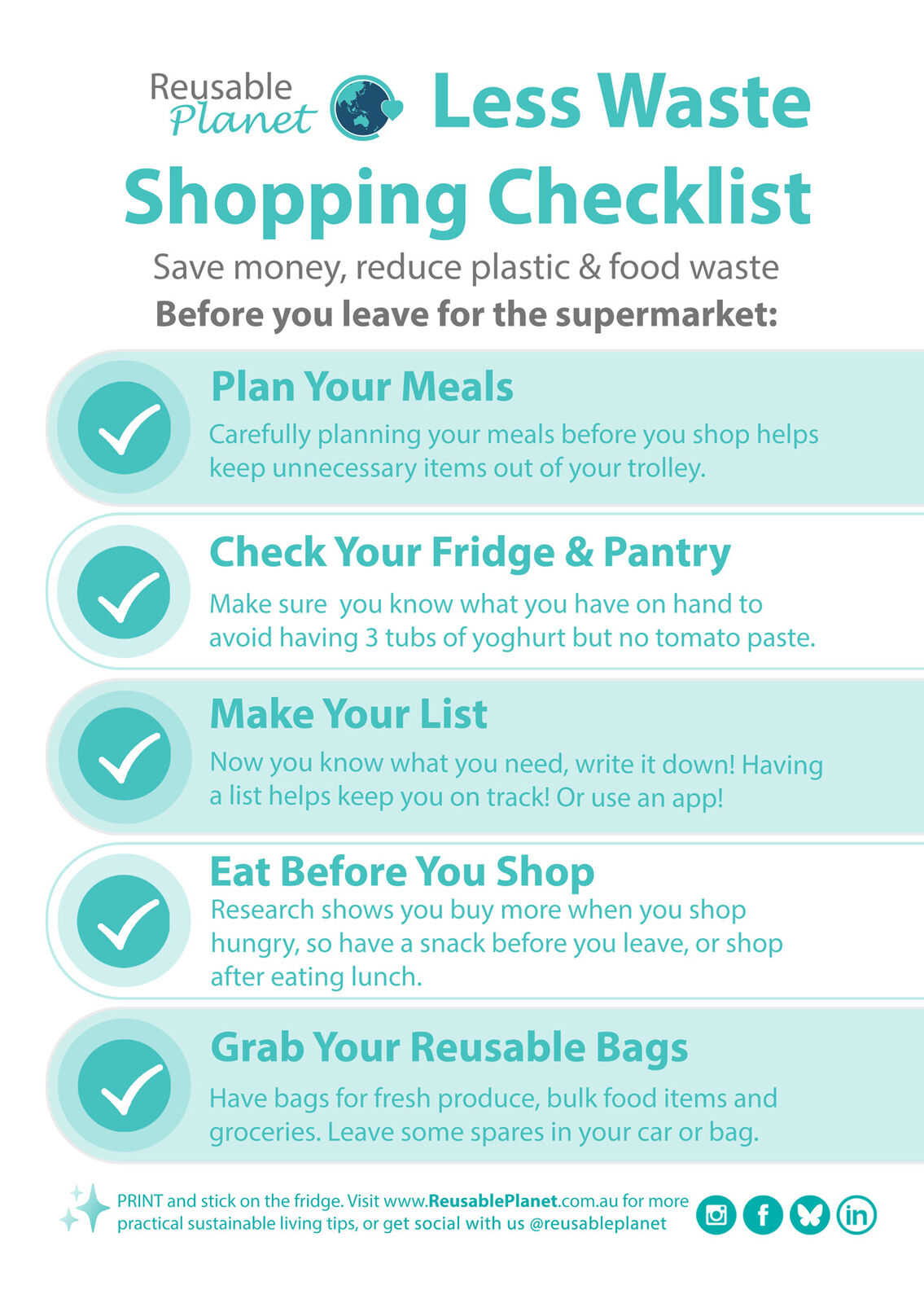
Grab our printable Less Waste Shopping Checklist to stick on your fridge before your next grocery shop.
Six Ways To Reduce Your Grocery Waste
1. Plan Before You Shop
It’s easy to overbuy. Carefully planning before you shop helps keep unnecessary items out of your trolley.
- Meal prep – This doesn't have to mean colour-coded spreadsheets and gourmet recipes. Unless you want it to... Even deciding what you'll cook for the next three nights before you shop can stop those "just in case" purchases that end up forgotten in the back of the fridge.
- Check your fridge & pantry – Who hasn’t bought an unnecessary third tub of yoghurt home from the shops? Do a quick review of what you already have in the pantry and fridge to avoid double-ups.
- Write a Shopping List – Armed with this information you can create a rock solid shopping list to keep you on track to only buy (mostly) what you need. Save money and waste less food!
- Grab your reusable shopping bags!
2. Never Shop Hungry
Believe it or not, being hungry is a proven trigger for over-spending at the supermarket. Research shows hunger reduces self-regulation and causes you to buy more food, crave high-calorie snacks and buy more and pay more – even on non-food items. So have a healthy snack before you head out the door.
3. Choose Better Packaging
Buy products packaged in glass, paper, cardboard, aluminium or even unpackaged items instead of plastic, where you can find a practical option. Items like pasta, flour and mayonnaise are all good examples.
When it comes to fresh produce, skip the pre-packaged items. Even if it’s cheaper per item, did you really want nine apples... or just five?
Skip the bagging for loose items that don’t need it. Bananas, carrots, oranges, for example, can all stay loose in the trolley and jump in the same shopping bag at the checkout.
Use your reusable shopping bags and produce bags. If you do forget them, all is not lost. Use a paper mushroom bag for produce and grab an empty cardboard box from the shelf for your groceries. Or if you keep your bags in the car like me, simply put them back in your trolley at checkout and pack them into your reusable bags back at the car.
.jpg "Reusable Shopping Bag Rescue")
4. Buy Seasonal & Local
Buying seasonal produce usually means it hasn't spent weeks in cold storage or travelled thousands of kilometres to reach your supermarket, adding food miles and fumigation to the equation.
Check the labels - you might be surprised to find oranges from California or garlic from China sitting beside Australian produce. Australian produce is likely to be much fresher, plus you’re supporting Aussie growers.
5. Shop Beyond the Supermarket
Skip the supermarket altogether and give your nearest bulk food store a go. You can take your own bulk food bags, or use supplied paper bags and store in your cannisters or upcycled glass jars at home.
Buying everything under one roof is convenient, but supporting specialty shops like your local fruit & veg store, delis and corner store fosters diversity and competition.
Your local butcher and bakery are more likely to accept your BYO bags and containers for breads and meats.
Head to the farmer’s markets with your reusable shopping bags and support local makers and growers.
BONUS: Supporting small businesses has benefits beyond reducing waste. You’re putting food on family tables, uniforms on local kids, supporting employment in your local community and keeping more money circulating in your community, boosting the local economy.
If you live in a regional or remote area and don't have many shopping options, don't stress. Look for local markets, paddock-to-plate producers or online retailers that clearly outline their sustainability practices.
6. CONTROVERSIAL LAST TIP! (Consider Eating Less Beef)

You want me to go vegetarian? Because of cow farts?
No, on either count. Although methane emissions are genuinely a factor: but it’s cow burps, not farts, that do most of the damage.
On a global scale, over 1.5 billion head of belching cattle mean their collective emissions make agriculture one of the leading contributors to global methane levels, and responsible for approximately 33% of Australia’s reportable methane emissions.
 But more than that, all those mooing beasts need space. Clearing land for grazing and feed production contributes to deforestation and habitat loss, particularly in the Amazon Rainforest and here in Queensland.
The Sunshine State clears hundreds of thousands of hectares of land annually (more than 1.7 million hectares since 2018), with approximately 90% driven by the beef industry. A topic better served with its own article.
Meanwhile, consider eating beef a little less often by swapping one or two beef meals each week for chicken, fish or plant-based meals.
Final Thoughts
We’ve been sold the convenience of a throw away culture all our lives. By taking small steps like these every day, we can unlearn the wasteful habits of a lifetime without the overwhelm, and clearly see where unnecessary waste sneaks in to our lives.
Every reusable bag remembered, every meal planned and every unnecessary piece of packaging avoided is a step forward in your less waste journey.
When you do have food waste, don't send it to landfill, where it creates methane and contributes to toxic leachate. Compost it instead!Composting enriches soil and reduces the need for watering and fertilisers.
If composting is not for you, use the council FOGO bin or local community garden.
As I said at the start – less waste living is a journey, not a destination.
Progress.
Not perfection.
Download your printable Less Waste Shopping Checklist, stick it on your fridge and see how many boxes you can tick on your next grocery shop.
Author: Rachel
Less Waste Advocate
First Published: July 2026
Updated:
- - - - - - - - - - - - - - - - - - - - - - - - - - - -
All our blog articles written by Rachel or our Guest Contributors are well researched and 100% written by a real person with lived experience in sustainable living. We hope you have learned something new, been inspired to make a small difference or simply enjoyed the read. To read more sustainable living articles, head over to our main blog page.
If there is something you would like to see us write about, we’d love to hear from you! Send us an email or join the conversation with us on social media! We're passionate about helping people reduce waste and avoid unnecessary plastic, so follow along and come be a change-maker with us!
Follow us on Instagram, Facebook LinkedIn or Bluesky @ReusablePlanet or SUBSCRIBE to our free Sustainable Living list and get weekly easy eco-living tips via email